The Ultimate Guide to Popular Vacation Spots in Italy: Italy’s Top 10 Places to Visit
Introduction
Italy remains one of the world’s most captivating destinations, consistently ranking among the top vacation destinations in Italy for travelers seeking history, culture, and scenic wonders. Its enduring charm lies in a unique fusion—where ancient ruins rise beside vibrant city life, Renaissance masterpieces coexist with modern design, and rolling vineyards stretch alongside sparkling coastlines. The country’s magnetic appeal is powered by its remarkable diversity: from eternal cities and romantic canals to alpine peaks and sun-drenched shores, there’s a corner of Italy that fulfills every travel dream.
For those intent on experiencing Italy’s most popular tourist spots, planning ahead is critical. Many of Italy’s must-see attractions—such as Rome’s Colosseum, Florence’s Uffizi Gallery, and Venice’s gondola rides—require advance booking, especially during peak travel seasons. Advance reservations aren’t limited to cultural icons; even intercity trains and ferries filling up fast are common, particularly for Italy’s top sightseeing spots and scenic holidays along the Amalfi Coast or Lake Como (Fodor’s Essential Italy 2024, QuartzMountain, 2023).
Travelers are drawn to Italy for many reasons, and the coming year’s top 10 places to visit in Italy reflect this spectrum. Some destinations boast world-renowned art and architecture—like Florence’s Duomo di Firenze, which draws over 1.5 million visitors annually (planurvacation.com). Others highlight ancient heritage (Rome’s Colosseum, Pantheon, Roman Forum), tranquil lakes (Como, Garda), dramatic natural beauty (the Dolomites), or give space for pure relaxation among cliff-top villages and Mediterranean beaches. This diversity ensures that Italy’s best places to visit for tourists include both high-profile cities and hidden gems.
Italy’s travel hotspots cater to a wide array of interests:
- Cultural enthusiasts will revel in UNESCO-laden cities and living history in museums and piazzas.
- Adventure seekers find world-class hiking, skiing, and marine sports among mountains, lakes, and coastlines.
- Wellness and relaxation travelers are drawn to legendary thermal spas, vineyard resorts, and health retreats.
- Families can combine educational sightseeing and outdoor fun at inclusive destinations.
- Explorers of the unexpected discover small towns, culinary traditions, and vibrant festivals rarely found in guidebooks.
Whether you are planning your next family getaway, cultural immersion, wellness break, or a quest for Italy’s hidden gems, the country’s blend of heritage, adventure, and unique experiences ensures that every journey is memorable—offering not just Italy popular holiday destinations, but countless Italy vacation ideas that reflect the full richness of the Italian peninsula (Best Places to Visit in Italy: 2025 Top Destinations for Every Traveler, Top 10 Must-Visit Places in Italy).
Rome: The Eternal City’s Timeless Charms
Rome remains among the top vacation destinations in Italy, with its blend of ancient wonders and vibrant modern life. For anyone seeking Italy must-visit places or planning Italy vacation ideas, the city offers an unrivaled spectrum of experiences.
Ancient Landmarks: Colosseum, Roman Forum, Pantheon
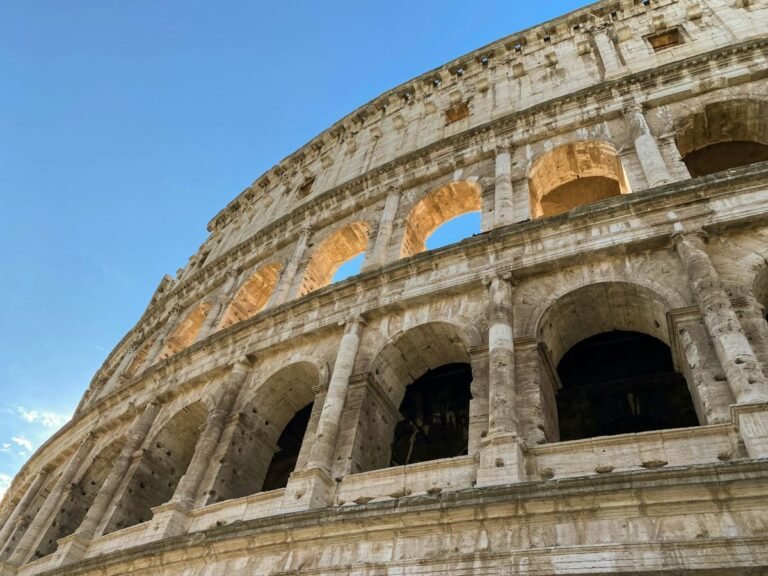
Rome’s ancient core stands as a living museum. The Colosseum, also known as the Flavian Amphitheater, is the most iconic of Italy’s best places to visit for tourists. This architectural marvel once seated 50,000 spectators, hosting gladiatorial games and public spectacles. Its distinctive design showcases three classical orders—Doric, Ionic, and Corinthian—layered vertically across its façade. Inside, tiered seating reflected strict Roman social hierarchy, while the hypogeum below enabled complex shows with mechanical lifts and animal cages. The Colosseum’s preservation projects and enduring influence on global architecture underscore its place among Italy’s famous tourist attractions and as one of the top 10 places to visit in Italy World History Journal, 2024.
Just steps away, the Roman Forum was ancient Rome’s civic and political heart. Its temples, basilicas, and arches reveal the city’s layered history—from political rallies and legal tribunals at the Curia and Rostra, to triumphal celebrations filling the square. Exploring the Forum gives insight into how Rome shaped the civic architecture found throughout Italy’s best cities to visit and influenced Italy’s cultural travel destinations History, 2025.
The Pantheon, completed around 126 AD, stands out for its massive unreinforced concrete dome and the oculus at its peak. This engineering feat allows light to illuminate the cavernous interior, showcasing the dome’s perfect proportions and the structure’s enduring harmony. Its granite portico columns and the rotunda became models for Renaissance and neoclassical buildings across Europe, earning its reputation as one of Italy’s top sightseeing spots and a must for architecture enthusiasts AncientScholar, 2024.
Modern Rome: Piazzas, Fountains, and Neighborhood Life
Rome’s modern pulse beats through its piazzas and neighborhoods—meeting points for locals and visitors alike. Piazza Navona, with its sweeping Baroque fountains (Fontana dei Quattro Fiumi, Fontana del Moro, and Fontana del Nettuno), captures the city’s artistic grandeur. The Trevi Fountain, an enduring symbol, draws crowds who keep alive the tradition of tossing coins for luck. Recent restoration projects underscore Rome’s dedication to preserving these scenic places to explore, even as measures like entrance fees and crowd limits protect sites such as the Trevi Fountain for future generations.
Venture to the trendy Trastevere district, where medieval streets frame lively trattorias and artisan shops. The Monti neighborhood, near the Colosseum, charms with its boutiques and aperitivo hotspots—examples of hidden gems in Italy to visit. These vibrant quarters contrast ancient ruins, demonstrating Rome’s “living city” status and offering some of the Italy popular holiday destinations beyond the obvious sites.
Insider Tips: Visiting in Peak vs. Off-Peak, Skip-the-Line Strategies
Rome, as one of Italy’s top travel hotspots, attracts millions each year. Peak months—April to October—see high tourist density, especially at the Colosseum, Vatican, and major piazzas. Top vacation spots in Italy like Rome benefit from visiting during shoulder seasons (November to March) when crowds thin and the city’s pace relaxes, ideal for both families and solo travelers seeking the best vacation spots in Italy for families.
To experience Italy’s must-visit places efficiently, advanced planning is key:
- Purchase Skip-the-Line Tickets: Buy online for sites such as the Colosseum, Roman Forum, Pantheon, and Vatican. Bundled tickets often save both time and money SkipTheLine.Tickets, 2025.
- Visit Early or Late: Early morning and late afternoon slots mean fewer crowds at top attractions.
- Embrace Combined Passes: Multi-site passes streamline entry and enable flexible sightseeing—helpful for seeing multiple Italy top sightseeing spots efficiently.
- Respect Dress Codes and Security: Especially at religious or government sites, dress appropriately and account for security checks.
- Use Official Entrances: At busy piazzas and fountains, respect new measures like timed entry or visitor caps (e.g., Trevi Fountain’s 400-person limit).
By leveraging these strategies, visitors enjoy Rome’s renowned monuments and vibrant culture, whether exploring famous tourist attractions in Italy or savoring neighborhood life among Italy’s scenic places to explore France 24, 2024.
Rome’s blend of ancient heritage and pulsating modernity guarantees an experience at the heart of Italy’s best cities to visit—and secures its place atop any list of Italy must-visit places PlanUrVacation, 2025.
Florence: The Cradle of the Renaissance
Florence stands out among the top vacation destinations in Italy, drawing millions to its remarkable blend of art, architecture, and culinary culture. As one of the best places to visit in Italy for tourists, it’s a living showcase of Renaissance achievement and Tuscan tradition.
Architectural Wonders: Duomo di Firenze and Brunelleschi’s Dome
The Duomo di Firenze (Cathedral of Santa Maria del Fiore) is one of Italy’s most popular tourist spots, attracting over 1.5 million visitors annually. Its standout feature, Brunelleschi’s Dome, is considered an unrivaled feat of Renaissance engineering and artistry. The double-shell dome, completed in the early 15th century, was built without traditional wooden scaffolding. Instead, Brunelleschi used an innovative herringbone brick pattern and internal/external ribs for stability, embedding iron and stone tension chains within the masonry to counteract outward forces.
Recent structural analyses employ 166 embedded electronic sensors to monitor the dome’s condition in real time. Machine learning tools analyze this data, forecasting potential stresses and guiding preservation—proof of Florentine innovation’s ongoing legacy. After six centuries, the dome stands as a testament to human ingenuity and makes Florence a top 10 place to visit in Italy for anyone interested in art, science, or architecture source.
Art and Museums: Uffizi, Accademia, and Hidden Gems
The Uffizi Gallery is one of the most famous tourist attractions in Italy, with masterworks by Botticelli, Leonardo da Vinci, and Michelangelo. Highlights include Botticelli’s “The Birth of Venus” and da Vinci’s “Annunciation.” Just a short walk away, the Accademia Gallery houses Michelangelo’s “David,” an iconic Renaissance sculpture drawing art lovers globally. For those seeking Italy’s hidden gems, Museo dell’Opera del Duomo presents tools, sketches, and original statues that shaped Florence’s skyline, while Museo Marino Marini spotlights 20th-century sculpture in a historical setting.
Local guides recommend exploring the lesser-known Bardini and Horne Museums, offering a quieter, intimate perspective on the city’s artistic riches—essential experiences for those searching out Italy’s cultural travel destinations.
Culinary Experiences and the Best Local Eats
Florentine food embodies the “cucina povera” (peasant kitchen) tradition—simple ingredients prepared with care. Among must-try dishes:
- Bistecca alla Fiorentina: Thick, juicy T-bone steak grilled rare over hot coals with just olive oil and salt, famously sourced from local Chianina cattle.
- Ribollita: A rustic soup of bread, cannellini beans, and seasonal greens—a favorite among families and travelers.
- Lampredotto: Traditional street food made from slow-cooked cow’s stomach, served as a sandwich with salsa verde.
Other regional specialties include Trippa alla Fiorentina (tripe in tomato sauce) and Francesina (beef stew with onions and tomatoes). Cooks and food historians say Florence’s local markets, especially Mercato Centrale, are top sightseeing spots for sampling these dishes from family-run stalls and trattorias.
Day Trips: Chianti Hills and Tuscan Countryside Escapes
Florence is the ideal gateway to the scenic places to explore in Tuscany. Top options:
- Chianti Hills: Just a short drive from Florence, the Chianti wine region offers small-group day trips to traditional wineries. Visitors can taste world-renowned Chianti Classico wines, enjoy tours of historic cellars, and pair local reds with salumi and pecorino cheese.
- Greve in Chianti: The heart of Chianti, Greve is known for its welcoming piazza, wine festivals, and artisan food shops.
- Tuscan Countryside: Day trips often feature stops at medieval towns like San Gimignano (famous for its towers and views), Montepulciano (noted for Vino Nobile wines), and Pienza (celebrated for ideal Renaissance urban design and pecorino cheese).
These excursions blend rural charm, historic architecture, and culinary traditions, making them some of the Italy best cities to visit and popular holiday destinations for families, couples, and solo travelers alike.
Venice: Romance and Canals
Venice stands as one of Italy’s top vacation destinations, world-renowned for its romantic canals, striking architecture, and storied traditions. Ranked among the Italy must-visit places and consistently featured on lists of the top 10 places to visit in Italy, Venice blends iconic sights with deeply rooted local culture3.
Iconic Sights
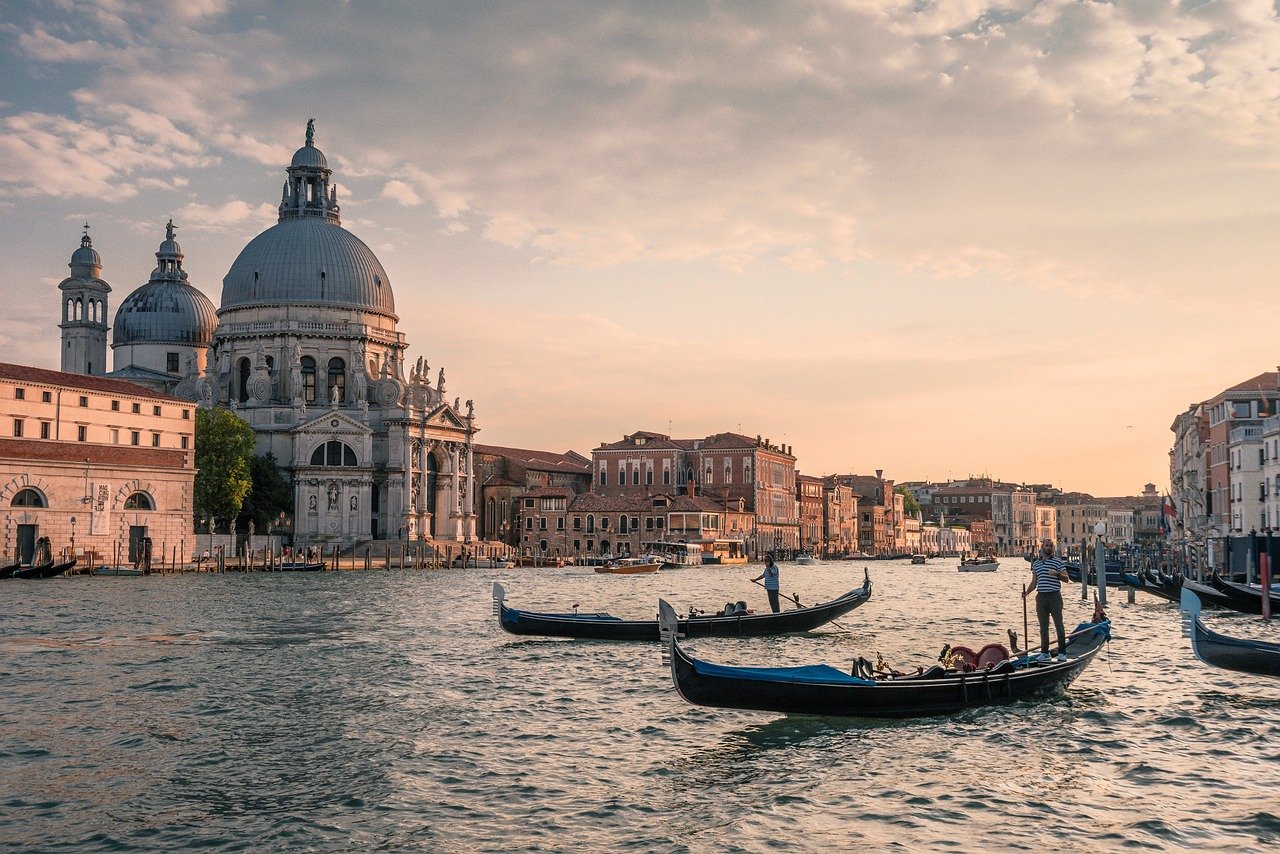
- Gondola Rides: Gliding through the Grand Canal and winding side canals in a traditional gondola offers a distinctive vantage point of Venice’s grandeur. These flat-bottomed boats, propelled by expert gondoliers, provide the quintessential Venetian experience and showcase historic palaces and bridges from the water. Rides usually last about 30 minutes and remain one of the most famous tourist attractions in Italy.
- Piazza San Marco: The city’s main square, also called St. Mark’s Square, stands at the heart of Venetian life. Bordered by the striking St. Mark’s Basilica, with its shimmering mosaics and onion domes, and the elegant arcades of the Procuratie, the piazza draws both crowds and pigeons to its stone pavement. It’s a hub of cultural, religious, and civic tradition.
- Doge’s Palace: Once the seat of Venetian power, this Gothic masterpiece served as the residence of the Doge, council chambers, and courthouse. Explore the ornate halls, cross the iconic Bridge of Sighs—the passageway between the palace and historic prisons—and witness the grandeur that shaped Venice’s legacy.
- Grand Canal: Serving as the city’s primary waterway, the Grand Canal winds in a sweeping “S” through Venice. It’s lined with centuries-old palazzi, vibrant markets, and historic churches like Santa Maria della Salute. Travel along its length on a vaporetto (water bus) or gondola for panoramic views of the cityscape3.
Managing Crowds and Sustainable Tourism
Venice is among the most popular tourist spots in Italy, leading to critical challenges with overtourism. To address congestion, especially around major Italy top sightseeing spots, the city instituted several policies:
- Tourist Group Limits: No more than 25 visitors per tour group are allowed in historic areas like Piazza San Marco. This measure reduces crowding and preserves the delicate urban ambiance.
- Loudspeaker Bans: Loudspeakers are no longer permitted for groups, lessening noise pollution and protecting the city’s peaceful character.
- Access Fee: Venice piloted a €5 access fee for day-trippers on peak tourist dates between 8:30 a.m. and 4 p.m. Travelers not exempt (residents, students, overnight guests) may be fined if caught without proof of payment. This policy aims to curb so-called “hit-and-run” tourism and foster more responsible visitor behavior.
- Continued Challenges: Despite new rules, resident reports indicate persistent overcrowding, especially at Italy popular holiday destinations like St. Mark’s Square. Many urge more robust strategies for balancing tourism and daily Venetian life.
These efforts represent the city’s evolving response to the strain that comes with being one of Italy’s best places to visit for tourists, as well as a globally recognized cultural travel destination.
Unique Venetian Festivals and Artisan Traditions
Venice’s calendar features spectacular festivals that define its cultural identity:
- Carnevale di Venezia: A flamboyant pre-Lenten celebration famed for its ornate masks, elaborate costumes, and public pageantry. It is a visual feast and attracts visitors from all over the world, maintaining ancient customs and community spirit.
- Festa del Redentore: Each July, Venetians commemorate deliverance from the 1576–1577 plague with a floating bridge to the Redentore Church, communal feasts, and fireworks. The festival merges religious tradition, civic pride, and aquatic spectacle.
- Regata Storica: This regatta revives Venice’s maritime supremacy with ceremonial boat parades and competitive rowing races along the Grand Canal. Locals don period costumes, and the entire city turns its gaze to the water.
- Artisan Traditions: Venice also maintains a rich tradition of artisan crafts, from intricate mask-making to the culinary heritage on display during festivals and in local markets.
These events and traditions are central for visitors looking for authentic Italy vacation ideas and immersive Italy cultural travel destinations.
Nearby Gems: Murano and Burano Islands
Beyond Venice’s crowded center lie islands that blend history, artistry, and vibrant local life—two hidden gems in Italy worth exploring:
- Murano: Celebrated globally for its glassmaking, Murano is home to centuries-old workshops. Artisans demonstrate time-honored techniques, producing everything from chandeliers to delicate beads. Visitors can tour glass factories and purchase unique souvenirs, making Murano a highlight among Italy scenic places to explore.
- Burano: Known for its fairy-tale colorful houses and lace-making tradition, Burano offers a slower pace and a photogenic setting. Artisans handcraft lace, a specialty since the 16th century. The Lace Museum (Museo del Merletto) documents this art form’s heritage and the ongoing efforts to preserve it. Walking down Via Baldassarre Galuppi, you’ll find local shops, trattorias, and the iconic Church of San Martino with its leaning bell tower.
Together, Murano and Burano provide fresh Italy vacation ideas for families and travelers interested in both famous Italy top sightseeing spots and lesser-known, culturally immersive experiences.
The Amalfi Coast: Scenic Splendor and Seaside Luxury
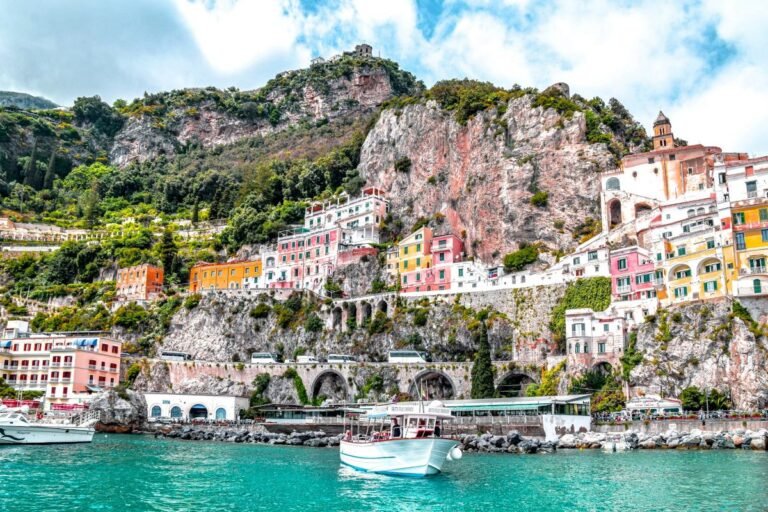
Rising above turquoise waters, the Amalfi Coast stands out among Italy travel hotspots for its dramatic scenery and blend of culture, nature, and luxury. Its precipitous cliffs, winding coastal roads, and pastel towns create one of the country’s most photographed and famous tourist attractions.
Dramatic Coastline: Positano, Amalfi, and Ravello
Positano commands attention with its steep, “vertical” layout. Rows of terraced, color-washed houses tumble down cliffsides, interwoven with flowering bougainvillea and narrow stairways. The town’s historic core features the Roman Archeological Museum (Positano MAR), which preserves ancient frescoes and artifacts from a 1st-century AD villa. John Steinbeck described Positano as “a dream place,” capturing its ethereal appeal that persists among Italy’s must-visit places.
Amalfi, once a powerful maritime republic, fuses medieval streets with vibrant piazzas. The Amalfi Cathedral, dedicated to Saint Andrew, showcases a majestic Arab-Norman façade with pointed arches, geometric mosaics, and a striking bell tower. Layers of history are visible in the basilica complex, including baroque chapels and the crypt of Saint Andrew. This blend of styles reflects the multicultural exchange characteristic of Italy’s best cities to visit in the south.
Perched above it all, Ravello is renowned for its panoramic gardens and refined villas. Villa Rufolo and Villa Cimbrone offer celebrated views over the Mediterranean, lush terraced gardens, and a historical legacy woven into Europe’s artistic heritage. Ravello’s love affair with music comes alive during the Ravello Festival, continuing a tradition that has drawn artists for centuries. These towns represent top vacation destinations in Italy, combining natural splendor and centuries of creative achievement (UNESCO World Heritage Centre, 2025).
Activities: Coastal Hikes, Boat Tours, and Hidden Beaches
The Amalfi Coast is an Italy popular holiday destination where exploration takes many forms:
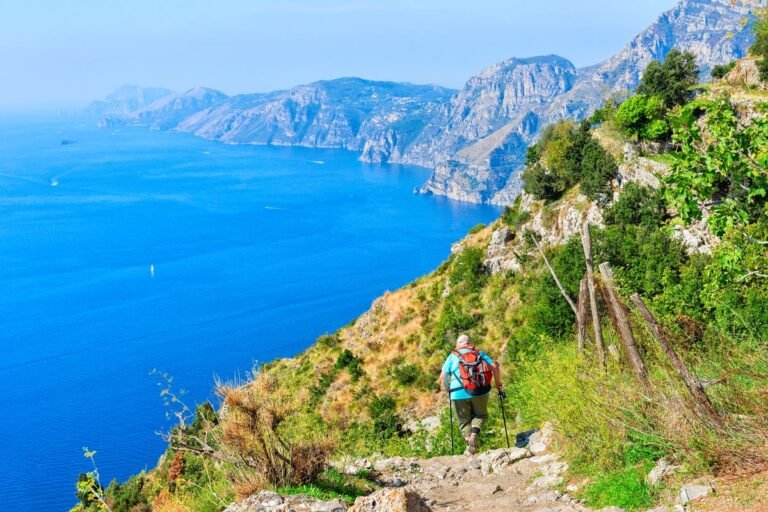
- Coastal Hiking: The Sentiero degli Dei (“Path of the Gods”) ranks among Europe’s legendary trails, winding along mountain edges from Bomerano to Nocelle. Hikers experience sweeping vistas over terraced lemon groves, stone villages, and the endless blue of the Tyrrhenian Sea. The descent into Positano involves a captivating stairway of over 1,000 steps, ending at the sea—a magnet for Italy vacation ideas that blend outdoor adventure with scenic reward. Local encounters, such as limoncello tastings, add cultural flavor along the route (The Guardian, 2022).
- Boat Trips: From Amalfi or Positano, small-group cruises reveal sea caves, dramatic sea stacks, and hidden coves accessible only by water. These tours can include stops to swim or visit secluded pebble beaches. For many families, this is the best way to discover hidden gems in Italy to visit, far from crowded roads.
- Hidden Beaches: Beyond the main promenades, travelers can seek out Spiaggia di Fornillo near Positano or Marina di Praia near Praiano. Sheltered by cliffs, these quieter stretches invite relaxed afternoons away from busier Italy top sightseeing spots.
Combining City and Beach: Day Trips to Naples, Pompeii, and Sorrento
The Amalfi Coast’s location makes it easy to combine cultural exploration and seaside relaxation—ideal for those seeking the best places to visit in Italy for tourists.
- Naples: Known for its energy, world-class pizza, and the historic district’s UNESCO status, Naples is less than ninety minutes by car or ferry. The city’s museums and subterranean wonders add depth to any itinerary.
- Pompeii: A short train or drive from Naples, the ruins of Pompeii transport visitors into daily Roman life, preserved in ash since the eruption of Mount Vesuvius.
- Sorrento: Gateway to the Amalfi Coast, Sorrento charms with citrus groves, cliff-top hotels, and lively marinas. Day trippers often blend the elegance of Sorrento with the wilder coastline beyond.
This matrix of city, coast, and countryside confirms the region’s place among Italy’s top 10 places to visit, offering something for art lovers, nature seekers, and families alike (Best Places to Visit in Italy: 2025 Top Destinations for Every Traveler). The Amalfi Coast provides a rare setting where the sublime meets the accessible—making it one of Italy’s scenic places to explore and an enduring symbol of Mediterranean allure.
The Dolomites: Alpine Adventure, Year-Round
All-Season Adventure: Outdoor Experiences Beyond Compare
The Dolomites are among the top vacation destinations in Italy for active travelers, offering four-season outdoor recreation and some of the best places to visit in Italy for tourists seeking adventure and scenery. In winter, the region becomes a world-class ski hub. Networks like Dolomiti Superski and 3 Zinnen provide skiers and snowboarders with interconnected slopes, modern lift systems, and snow-guaranteed conditions from December through March. Alpine and cross-country skiing, snowboarding, and tobogganing attract families, beginners, and experts alike. Events such as the Sellaronda Skimarathon and local festivals enliven the winter calendar.
Spring and summer transform the landscape into a paradise for hikers and cyclists. Panoramic trails wind through alpine pastures, dense forests, and dramatic rocky plateaus, appealing to all abilities. Mountain biking and cycling routes, including classic passes and challenge rides, are celebrated by events like Sellaronda Bike Day. Those craving more challenge can ascend via ferrata routes, climb towering spires, or try rafting and horseback riding. The 3 Zinnen Mountain Card and similar passes give access to lifts and cable cars for easy exploration and stunning vistas.
Excitement Builds for the 2026 Winter Olympics
Cortina d’Ampezzo stands at the forefront of the Dolomites’ Olympic preparations, reinforcing its status as an Italy must-visit place. Investments in the region’s infrastructure have ramped up, centered around state-of-the-art sporting venues and eco-conscious transport. The Eugenio Monti sliding center is undergoing a major reconstruction to meet international standards for bobsleigh, luge, and skeleton, scheduled for completion by late 2025. Snowmaking giants like TechnoAlpin are implementing advanced systems to guarantee Olympic-level snow, even as climate variables shift. Transportation upgrades, improved communications (with Italian leaders like Leonardo providing new tech), and innovative hospitality options reflect the region’s blend of alpine tradition and forward-looking design.
The Olympic legacy aims for more than world-class events; it’s about sustaining the region’s global appeal, integrating environmental responsibility, and supporting local economies well beyond 2026. Cortina’s role in the Games will further cement the Dolomites as one of Italy’s most famous tourist attractions and a fixture among Italy top sightseeing spots planurvacation.com.
Luxury, Sustainability, and Alpine Wellness
Luxury accommodations in the Dolomites are redefining what it means to vacation in the Alps. Properties such as Carezza Resort, Forestis, Lefay Resort & Spa Dolomiti, and Vigilius Mountain Resort set high standards for eco-friendly design and world-class service. Guests enjoy spa treatments with panoramic alpine views, holistic therapies using mountain botanicals, and wellness journeys infused with Ladin cultural traditions.
Many of these resorts utilize renewable energy, locally sourced materials, and sustainable food practices. The Seiser Alm high plateau, for instance, combines dramatic scenery with eco-conscious hospitality, making it a hidden gem in Italy to visit for both adventure seekers and wellness travelers. Family-oriented features and all-ages adventure options have also secured the Dolomites’ reputation as one of the best vacation spots in Italy for families.
Cortina d’Ampezzo and Ortisei: Cultural Heartbeats of the Alps
Two of the Italy best cities to visit in the Dolomites, Cortina d’Ampezzo and Ortisei, stand out not only for sport but for unique local heritage. Cortina, known as the “Queen of the Dolomites,” pairs international events with Ladin folk traditions, vibrant markets, and renowned gastronomy. Ortisei, the centerpiece of Val Gardena, is famous for its colorful houses, traditional woodcarving crafts, and Ladin language.
Annual festivals, such as Sacred Heart fires and the autumn “Leaf Market” (Sega Sacun), showcase regional customs and agricultural routines. The Museum Gherdëina in Ortisei highlights Ladin craftsmanship and the evolution of local cultures, reinforcing the region’s profile as a cultural travel destination. Guided farmstead visits and culinary events give visitors in-depth access to Ladin life and mountain cuisine.
Nature, Relaxation, and Sport: Seamlessly Connected
What truly sets the Dolomites apart among Italy popular holiday destinations is the seamless blend of nature, relaxation, and sport. Integrated lift systems connect ski runs with high-altitude hiking and cycling routes. Boutique hotels and alpine wellness resorts fuse modern amenities with ancient therapies, such as hay baths or forest bathing. Hoteliers collaborate to deliver experiences that combine adventure, luxury, and environmental care.
The result is a region that caters to all preferences: adrenaline-pumping mountain sports, restorative wellness, immersive cultural exploration, and breathtaking vistas—year-round. With the upcoming Olympics, new eco-trails, and ever-expanding luxury offerings, the Dolomites remain one of the Italy travel hotspots and a standout among scenic places to explore planurvacation.com.
Lake Como and Lake Garda: Tranquil Lakeside Escapes
Lake Como and Lake Garda stand as two of Italy’s most scenic places to explore, each with a unique blend of culture, history, and leisure that distinguishes them among the top vacation destinations in Italy.
Distinct Experiences: Cernobbio’s Luxury vs. Garda’s Vibrant Diversity
Cernobbio, on Lake Como’s southwestern edge, epitomizes luxury tourism. Its lakeside promenade is lined with historic villas whose architecture and grounds recall the age of Italian aristocracy. Chief among these is Villa d’Este—a 16th-century former aristocratic residence, now an elite hotel welcoming global luminaries and hosting world-class events. Other landmarks like Villa Serbelloni (integrated into leading hotel rewards programs), Villa Bernasconi (famed for its Art Nouveau design), and Villa Erba (venue for major art and film events) cater to the high-end traveler seeking exclusivity, stunning views, and refined hospitality [Forbes, 2025].
By contrast, Lake Garda is a dynamic mix of urban life, outdoor adventure, and natural beauty. Here, city energy blends with tranquil lakeshores. Towns like Riva del Garda buzz with cafés and markets, while quiet gardens and small harbors offer serene escapes. The lake’s scale allows for both bustling resorts and hidden gems nestled between vineyards and rolling hills.
Top Activities: Lakeside Walks, Villa Tours, Watersports
Both lakes specialize in lakeside promenades with panoramic views, making them among the best places to visit in Italy for tourists who want immersive relaxation with a cultural edge. In Cernobbio and neighboring Lake Como towns, walking along the lungolago leads past ornate gates, sculpted gardens, and centuries-old palaces. Guided villa tours are a highlight:
- Villa Carlotta (Tremezzo): Renowned for neoclassical architecture, its art collections (featuring Canova and Hayez), and botanical gardens that bloom with azaleas and citrus in spring and summer.
- Villa Melzi d’Eril (Bellagio): Known for its minimal neoclassical lines, English-style gardens with rare trees, lakeside pathways, and a neoclassical temple [Garden Tours, 2023].
Lake Garda’s activity roster centers on watersports that leverage the region’s famed wind conditions (Ora del Garda), making it one of the top Italy travel hotspots for sailing, windsurfing, and especially kitesurfing. Prime locations—such as Campione, Malcesine, and Navene—host schools for all skill levels. Additional options include canoeing and stand-up paddleboarding, all facilitated by robust infrastructure.
Connecting Culture and Relaxation: Towns, Cuisine, and Vineyards
Historic towns surround both lakes, embedding visitors in centuries of architecture and tradition. Around Lake Como, Rezzonico’s medieval fortress, the 11th-century Vezio Castle, and Como’s Gothic Duomo offer compelling sightseeing. Religious architecture, from the lively San Fedele in Como to serene monasteries like the Abbey of Piona, reflects the area’s deep cultural roots. On Lake Garda, towns like Limone sul Garda (famous for lemons and pastel houses), Bardolino (center of a celebrated wine region), and Gardone Riviera (home to grand villas and botanical gardens) stand out for their unique ambiance [Trips2Italy.com, 2024].
Local cuisine further distinguishes these lakes among Italy’s best vacation spots for families and food lovers. Lake Garda’s culinary scene features carne salada, canederli, and strudel—dishes reflecting both Italian and Central European heritage. The lake’s shores are dotted with DOC wine zones, including Bardolino, Lugana, and Custoza, making vineyard tours and wine tastings a top draw.
Lake Como’s food culture is tied to Alpine influences. Valtellina, an adjacent wine region, provides Nebbiolo-based reds like Sforzato, best enjoyed with regional cheese (bitto) and pizzoccheri. Vineyard visits often involve traversing terraced slopes and sampling unique wines little known outside Italy [WineTourism.com, 2024].
These lakes offer the perfect blend of refined relaxation, rich heritage, and outdoor adventure, cementing their place among Italy’s most popular holiday destinations and cultural travel hotspots.
Matera and the Ionian Coast: Italy’s Mysterious South
Matera’s Cave Dwellings (Sassi) and Cinematic Ambiance
Matera’s Sassi are among the top vacation destinations in Italy due to their blend of history, architecture, and film legacy. These ancient cave dwellings, carved into the soft limestone ravine, offer a rare window into Italy’s early urban settlement. The Sassi are divided into two districts, Sasso Caveoso and Sasso Barisano, forming a honeycomb of homes, rock churches, and monasteries that have been inhabited since the Paleolithic era. For much of the 20th century, the Sassi symbolized severe poverty; entire families lived in cramped, unsanitary caves with livestock, resulting in government-imposed relocations in the 1950s.
Since earning UNESCO World Heritage status in 1993, the Sassi have been revitalized and are now a showcase of smart restoration. Many caves house boutique hotels, museums, restaurants, and cultural venues, such as the Vetera Matera project and Casa Cava, which fuse ancient design with contemporary function. Travelers can sleep in centuries-old stone suites, dine in candlelit grottos, or join workshops in hand-carved halls, experiencing “underground luxury” balanced with historical integrity.
Matera’s unique look has also made it a major filming location for global cinema, lending its ancient character to productions like “The Passion of the Christ” and “No Time to Die.” Dedicated film tours trace the footsteps of James Bond, while the city’s rugged skyline substitutes for ancient Jerusalem in numerous biblical epics. This cinematic identity draws movie fans and culture lovers alike, shaping Matera as one of Italy’s must-visit places for travelers seeking both architectural wonders and pop culture landmarks.
Exploring the Ionian Coast: Unspoiled Beaches and Authentic Village Life
The Ionian Coast, stretching across Basilicata and Calabria, stands apart from Italy’s more commercialized shorelines. It’s prized as a hidden gem in Italy to visit, featuring pristine beaches, turquoise waters, and stretches of sand that remain free from mass tourism. Metaponto is famed for its Blue Flag beaches and ancient Greek ruins, like the Tavole Palatine, where its Doric columns rise above the coast. Pisticci, a hilltop town nearby, combines stunning whitewashed lanes with access to peaceful seaside retreats.
Calabria’s coastline adds depth with wild spots like Capo Vaticano, Tropea, and the myth-laden Riace bronzes near Reggio Calabria. Inland, villages such as Stilo and Pentedattilo capture a slower rhythm of life. Here, traditions persist through weekly markets, music festivals, and artisan workshops. Food highlights may include homemade ‘nduja, fresh seafood, and local Greco wines, sampled in farmhouse kitchens and vibrant coastal trattorias.
The area is also dotted with archaeological parks, where you can wander among the remnants of Magna Graecia history. National Geographic and other sources praise the Ionian Coast’s ability to deliver authentic village ambiance, natural Mediterranean beauty, and cultural depth—qualities distinguishing it from Italy’s famous tourist attractions in places like Rome or Venice.
Combining City Sightseeing with Secluded Sunbathing
What makes this region one of Italy’s top vacation ideas for families and those craving variety is its capacity to unite cultural exploration with relaxation. Matera, one of Italy’s best cities to visit for tourists interested in history and culture, can be paired with easy day trips to the Ionian shores, just under an hour’s drive away.
Integrated itineraries such as the MateraMare Rural Wine Experience showcase how visitors can split their time between wandering Matera’s labyrinth of caves, attending summer music festivals, tasting Lucanian cuisine, and sunbathing on nearly deserted beaches. Travelers can tour cave museums in the morning, then picnic among Metaponto’s Greek ruins at midday, or join a ceramic workshop in Tursi before catching sunset on the Pisticci coast.
These multi-faceted experiences characterize the region as an Italy scenic place to explore, benefiting both the adventurous and the contemplative traveler. Whether exploring UNESCO sites, participating in grape harvests, or relaxing at unspoiled beach coves, this corner of southern Italy delivers a rare blend of “city and sea” that remains largely untouched by crowds—making it a standout among Italy’s popular holiday destinations and a staple in any list of Italy must-visit places for cultural and natural immersion.
Sicily and Taormina: Ancient History Meets Mediterranean Glamour
Perched high above the Ionian Sea, Taormina is an essential stop among the top vacation destinations in Italy—a place where ancient history blends seamlessly with Mediterranean luxury. Known for its dramatic landscape, storied heritage, and vibrant culture, Taormina stands out as one of the most scenic places to explore in Sicily.
Taormina’s Greek Theatre: Where History Faces the Sea
The Greek Theatre, or Teatro Antico di Taormina, is a defining symbol of the city and one of the most famous tourist attractions in Italy. Carved into a natural hillside in the 3rd century BCE, this ancient amphitheater fuses Greek foundations with impressive Roman renovations. Its vast, semicircular seating (cavea) can accommodate thousands of spectators and offers unparalleled views: Mount Etna hazy in the distance and the cobalt expanse of the Ionian Sea below.
The theater is more than an archaeological marvel; it actively hosts concerts, operas, and film festivals thanks to its world-class acoustics and incomparable setting. Open-air performances here are enhanced by sunset panoramas, making any visit a quintessential Mediterranean experience. Both historically rich and visually stunning, the Greek Theatre epitomizes why Taormina consistently ranks among the best places to visit in Italy for tourists and cultural enthusiasts alike.
Sea Views and Luxury Accommodations
Taormina’s reputation as a glamorous Italy travel hotspot is fortified by its collection of luxury hotels and exclusive resorts. For those seeking Italy popular holiday destinations with world-class amenities, the town’s offerings are legendary:
- Atlantis Bay and Mazzarò Sea Palace (by V Retreats) showcase modern design, private bays, and gourmet dining on terraces with sea views. Atlantis Bay’s rooms overlook the crystalline Bay of Sirens, and the BLUM restaurant at Mazzarò Sea Palace is a favorite for its inventive Sicilian cuisine amid coastal tranquility.
- Villa Sant’Andrea (a Belmond Hotel) pampers guests with a private beach, lush subtropical gardens, and luxurious suites like the Ionica Pool Suite, boasting a terrace carved from Etna lava stone and panoramic sea vistas.
- Grand Hotel Timeo, perched beside the Greek Theatre, is celebrated for its antique-filled rooms, sweeping terraces, and a pool overlooking the straits. Its mix of tradition and elegance makes it a prime example of Italy’s best vacation spots for families and couples.
- Castello di San Marco offers a unique Baroque ambiance, combining historical architecture with private beachfront relaxation.
Continuous renovations and attention to personalized service define these properties, ensuring Taormina remains at the forefront of Italy’s top sightseeing spots [Luxury Travel Advisor].
Savoring Sicilian Cuisine and Local Markets
Taormina’s culinary scene is a vibrant showcase of Sicilian tradition. The town’s coastal position means seafood dominates local menus—think swordfish carpaccio, linguine with clams, and grilled prawns sourced fresh from nearby waters. Arancini—crisp rice balls with ragu or mozzarella—are a staple street snack, easily found at both bustling markets and seasonal food festivals.
Classic pastries such as cannoli and cassata headline dessert selections, attracting visitors during Taormina’s annual Festival of the Cannoli. Another regional favorite is granita served with a fluffy brioche, favored at breakfast or as a refreshing dessert during the sun-baked summer months.
The heart of Taormina’s food culture lies in its local markets, where stalls brim with ripe citrus, capers, marzipan fruits, cheeses, and cured meats. Culinary tours lead visitors through these markets and on to nearby Catania, offering in-depth exposure to authentic flavors, traditional methods, and the social rituals of Italian food culture. These experiences position Taormina as a top destination for food lovers searching for both classic and innovative Italian tastes [Cuisine Voila].
Beyond Taormina: Etna Volcano Tours, Coastal Drives, and UNESCO Heritage
Sicily’s allure continues beyond Taormina. Mount Etna, Europe’s largest active volcano, climbs dramatically on the horizon and is a magnet for adventurers. Tours range from structured summit hikes to cable car ascents via the Funivia dell’Etna, taking visitors up to 2,500 meters where lava flows and craters reveal the region’s volatile geology. Many excursions pair volcanic exploration with tastings at hillside vineyards, spotlighting Etna’s unique terroir and celebrated wines [excursionsetna.com].
For those seeking Italy vacation ideas rich in history and scenery, the region’s UNESCO World Heritage sites beckon. Southeast of Taormina lies Val di Noto and its eight Baroque towns—including Noto, Modica, and Ragusa—rebuilt after the 1693 earthquake. These towns are architectural treasures: limestone palazzi, intricate churches, and urban layouts that reflect 18th-century innovation and resilience. Visiting these sites offers a glimpse into Sicily’s layered heritage and modern preservation efforts [UNESCO World Heritage Centre].
Other hidden gems in Italy to visit near Taormina include charming hill towns like Savoca (famous for its film history), Marzamemi’s picturesque fishing port, and archaeological sites in Buccheri. Each destination adds texture to the Sicilian experience, making the region one of Italy’s best cities to visit for those who seek both cultural depth and scenic beauty.
From ancient theaters to bustling markets, luxurious resorts to volcanic landscapes and UNESCO marvels, Taormina and its surroundings embody Sicily’s unique blend of history, glamour, and culinary artistry—firmly securing their place among Italy’s most enduring and unforgettable travel destinations.
Verona: Romance and Living History
Verona stands out as one of Italy’s most evocative cities, blending legendary romance with living history. This UNESCO World Heritage site draws travelers from around the globe, consistently ranking among the top vacation destinations in Italy and offering a multitude of experiences for couples, families, and history enthusiasts alike.
Juliet’s Balcony, Ancient Arena, and Shakespeare’s Legacy
At the heart of Verona’s allure is Juliet’s Balcony, a stop for countless tourists seeking the spirit of Shakespeare’s “Romeo and Juliet.” Though the famed balcony at Casa di Giulietta was added in 1939—not during medieval times—the site is steeped in symbolic romance. Visitors linger beneath the 14th-century walls, photograph Juliet’s bronze statue, and leave handwritten love notes, a tradition that has transformed the spot into one of Italy’s most popular tourist attractions. While the balcony’s historical authenticity is debated, its cultural resonance continues to shape global perceptions of Verona as a city of eternal love WhiteMad, 2025 Times of India Travel, 2025.
A short stroll away, the Verona Arena stands as a testament to the city’s Roman past. Built in the 1st century CE and fashioned from pink and white limestone, this remarkably preserved amphitheater accommodates crowds for performances centuries after its construction. Its enduring significance cements Verona’s reputation among Italy’s must-visit places and top sightseeing spots Encyclopaedia Britannica, 2024.
Verona’s connection to Shakespeare deepens with themed programming throughout the year. The annual Shakespeare Walk highlights 37 locations within the city that inspired or have been linked to his plays. As host of the World Shakespeare Congress in 2026, Verona continues to entwine global literary heritage with local tradition The River News, 2024 Visit Verona, 2024.
Festivals, Opera, and Vibrant Piazzas
Festival culture animates Verona throughout every season. The Arena di Verona Festival, an internationally recognized opera event established in 1936, draws tens of thousands for open-air performances from June to September. Acclaimed productions of Verdi, Puccini, and contemporary works unfold in settings that merge antiquity and artistry Wikipedia, 2024.
Family travelers and culture seekers will also find concerts, theater, and city-wide celebrations that transform Piazza Bra and Piazza delle Erbe—central gathering places for locals and tourists alike—into hubs of music, markets, and street life. Additionally, the Vinitaly wine fair rivets attention each spring with tastings, business networking, and a public celebration of Italian wine culture. Vinitaly 2024 saw over 97,000 attendees, further cementing Verona’s status as one of Italy’s popular holiday destinations and a must for wine lovers MŽ Consulting, 2024 ANSA, 2025.
Exploring Lake Garda: City Life Meets Lakeside Leisure
Within easy reach of Verona, Lake Garda offers an escape into natural beauty without sacrificing cultural intrigue—making the area one of Italy’s best vacation spots for families and a hidden gem for those seeking both relaxation and adventure. The lakeside town of Sirmione is famed for its thermal springs, vibrant squares, and Roman ruins, particularly the Grotte di Catullo. These sprawling villa remains, with mosaic floors and panoramic vistas, serve as a tangible link to antiquity and are a highlight of any Lake Garda itinerary Italy Magazine, 2024.
Wine tasting routes abound in the surrounding countryside, with vineyards producing world-renowned Lugana and other varietals. Guided bike tours, walking excursions, and tastings fuse history, scenery, and Italian gastronomy—offering visitors a multi-sensory experience that ranks among Italy’s scenic places to explore Lonely Planet, 2023 The Local Italy, 2023.
Whether drawn by the legendary romance of Juliet’s balcony, the grandeur of ancient amphitheaters, or the tranquil shores of Lake Garda, Verona epitomizes the richness and depth found in Italy’s top travel hotspots and remains a cornerstone among Italy’s best cities to visit.
Bologna and Varignana: Gastronomy and Wellness
Bologna, recognized among Italy’s best cities to visit, captivates with its medieval streets, culinary heritage, and vibrant university life. Its UNESCO-listed porticoes function as thresholds between private and public, historic and contemporary. These covered walkways shape everyday life, supporting a lively street culture where residents and tourists mingle, shop, and debate under shelter—physical embodiments of Bologna’s communal spirit and layered history Cultural Geographies, 2024.
The city’s university, established in 1088, is considered the oldest in the western world. Its presence infuses Bologna with a dynamic, youthful atmosphere. The intellectual fervor traces back to medieval times, when public sphere debates—including heresy trials and civic reforms—were held in view of the citizenry. These traditions of open exchange and legal innovation endure in the city’s present-day academic and cultural hubs The English Historical Review, 2024.
Bologna’s gastronomy is central to its reputation as a top vacation destination in Italy for food lovers. Local markets brim with fresh produce and artisanal wares. Highlights include:
- Tagliatelle al Ragù: Egg pasta ribbons topped with the city’s signature slow-cooked meat sauce.
- Tortellini in Brodo: Stuffed pasta served in rich broth—a must during winter.
- Mortadella: The delicately spiced, silky pork sausage, found in traditional panini.
- Gelato: Small gelaterias serve up inventive seasonal flavors.
Hands-on culinary experiences abound. Cooking classes led by acclaimed local chefs offer visitors the chance to master pasta-making or uncover secrets of Bolognese sauces. Notable examples include the popular sessions with Chef Giovanna S. and interactive workshops showcasing regional classics. These programs illustrate how culinary practice is an active extension of cultural heritage Penn Abroad, 2025, World Tourism, 2025.
Just 25 kilometers southeast, Varignana emerges as a hidden gem in Italy, offering a tranquil rural counterpart to Bologna’s urban energy. The area is renowned for its rolling vineyards and dedicated wine estates. Palazzo di Varignana’s world-class vineyards blend tradition and innovation, cultivating both native varieties—like Albana Romagna DOCG, appreciated for its golden hue and aromatic depth—and international grapes such as Chardonnay and Pinot Nero. The estate’s Villa Amagioia Blanc de Blancs Metodo Classico underscores its commitment to refined, terroir-driven wines Wine Couture, 2024.
Wine tourism in Varignana extends beyond tastings. Annual gatherings like “September in the Vineyard” feature guided walks, pairings of wine and estate-produced olive oil, and educational workshops about sustainable agriculture. The “Vinum Experience” immerses guests in the landscape through tastings and vineyard tours, with spa treatments that incorporate Sangiovese extracts—merging wellness and oenology Travel Dreams Magazine, 2024, Vinetur, 2024.
Varignana is also at the forefront of Italy’s wellness tourism movement. The Varsana Spa and affiliated wellness resorts provide intensive retreats—like the “Stress Release” and “Masc” programs—which blend personalized health assessments with spa techniques, yoga, guided vineyard walks, and nutrition coaching. Guests access Turkish Hammam, Japanese Ryokan-inspired spaces, and swimming pools, enjoying relaxation surrounded by organic olive groves and seasonal gardens. Many offerings incorporate locally produced olive oil or wine for a holistic sensory experience Luxury Travel Advisor, 2025, Globetrender, 2025.
This unique blend—urban exploration in one of Italy’s top sightseeing spots followed by rural relaxation in Varignana—epitomizes the synergy between culture and wellness. Recent trends combine Bologna’s iconic architecture, lively piazzas, and gourmet restaurants with the restorative calm of Varignana’s vineyards, luxury spas, and nature trails. Seamless connections, facilitated by infrastructure and smart urban-rural planning, ensure travelers can move easily from the city’s historic heart to the peaceful countryside, enjoying both halves of Emilia-Romagna’s allure arXiv, 2024.
For visitors crafting Italy vacation ideas, the Bologna–Varignana route is a model itinerary: distinctive cuisine, centuries-old traditions, world-class wellness—all within reach, making it one of Italy’s most popular holiday destinations for families, culture seekers, and wellness travelers alike.
Bonus Destinations: Other Must-See Italian Vacation Spots
Italy is filled with more than just its blockbuster sights. Some of the top vacation destinations in Italy are found off the headline-grabbing tourist track, offering distinctive atmospheres, historical richness, or nature experiences. Here are four must-visit places: Cinque Terre, Capri, Siena, and Turin—each a highlight among Italy’s top sightseeing spots.
Cinque Terre
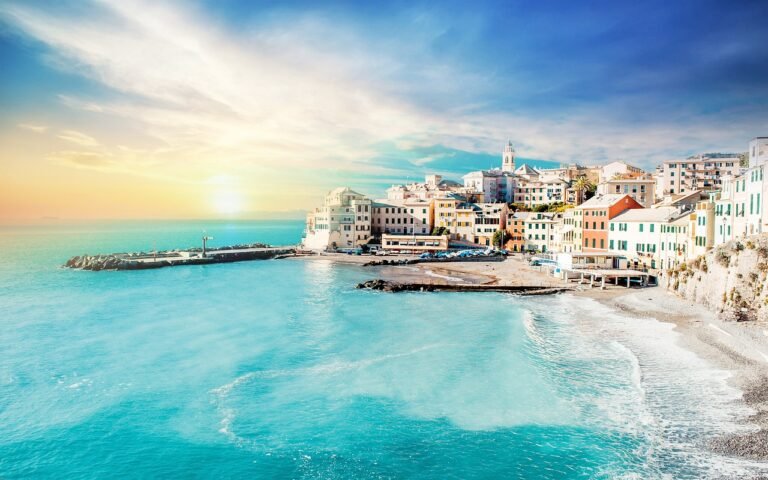
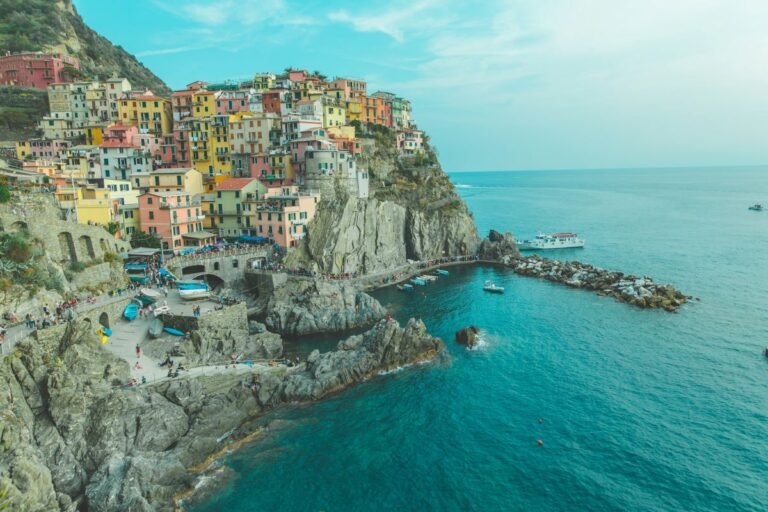
Cinque Terre, set along Liguria’s rugged coastline, features five historic villages perched above the Ligurian Sea. This Italy must-visit place is a cultural landscape, recognized as a UNESCO World Heritage Site for over a millennium of human adaptation. Stone-walled terraces climb dramatic slopes, supporting vines and olives—a testament to ingenuity in overcoming harsh terrain.
- Best for: Outdoor enthusiasts, hikers, and cultural travelers.
- What makes it unique: The scenic footpaths, notably the Via dell’Amore (reopening July 2024), offer panoramic coastal views and a chance to trace the original connective routes between villages. Preservation efforts carefully balance access with protection of fragile ecosystems, responding to the popularity among travelers seeking scenic places to explore in Italy and sustainable tourism experiences. The area is also praised for its authenticity, as modern infrastructure complements, rather than overtakes, traditional ways of life.
Capri
Capri is among the best vacation spots in Italy for families and those seeking luxury. Famous for the Blue Grotto, a sea cave lit with electric blue light, Capri fuses natural wonder with high-end amenities.
- Best for: Luxury travelers, couples, and day-trippers from the Amalfi Coast or Naples.
- What makes it unique: The Blue Grotto highlights Capri’s draw as one of the top vacation destinations in Italy. Visitors can book private boat tours for a deluxe experience or combine sightseeing with gourmet dining. In peak season, early arrival cuts down waiting for coveted cave excursions. Beyond the grotta, Capri’s upscale hotels, private villas, and even helicopter transfers set it apart among Italy’s most popular holiday destinations.
- Example: Guided excursions often include famous tourist attractions in Italy such as the Faraglioni rocks, while exclusive tours can grant access to hidden coves for snorkeling or secluded relaxation (glimpsesofitaly.com).
Siena
Siena, in the heart of Tuscany, preserves its medieval character like few cities. The city’s fan-shaped Piazza del Campo and the looming Torre del Mangia reflect a commitment to architectural continuity and civic tradition.
- Best for: Cultural travelers, history buffs, and families seeking immersive educational experiences.
- What makes it unique: Siena is home to the Palio di Siena, a centuries-old horse race, and vibrant contrade traditions—making it a true Italy cultural travel destination. Walk the compact medieval streets and feel the enduring spirit of community. For families, Siena introduces children to the past through exploration of its labyrinthine alleys and the spectacle of the Palio, usually held in July and August. Scholars and journalists mark Siena as a living example of balancing historic preservation with contemporary life (Smithsonian Magazine).
Turin
Turin distinguishes itself among Italy’s best cities to visit through a blend of Baroque elegance and industrial innovation. A gateway to northern Italy, Turin is less crowded than other famous tourist attractions in Italy, yet rich in history and creativity.
- Best for: Design aficionados, urban explorers, families, and auto enthusiasts.
- What makes it unique: The Church of San Lorenzo showcases complex vaults and inventive Baroque forms. The city is a pioneer in digital heritage, as seen through virtual exhibits of historic architectural works. Turin’s National Automobile Museum is a hotspot for those interested in Italy’s design and engineering legacy, hosting international exhibitions, such as “100 Years of Le Mans” and “Ferrari – Road and Race Masterpieces,” making it a key stop for Italy vacation ideas that go beyond the expected.
- Example: Families can enjoy interactive displays at the museum, while architecture fans can explore the digital reconstructions of Antonelli’s projects, highlighting Turin as both a history-rich and modern Italy travel hotspot (SpringerLink).
These destinations each embody different facets of what makes Italy a perennial favorite among global travelers—authentic landscapes, luxury, timeless traditions, and historical innovation—making them ideal options as both headline and hidden gems in Italy to visit.
How to Combine City, Countryside, and Beach: Expert Itinerary Ideas
Pairing Italy’s iconic cities with its scenic countryside and coastline brings together the country’s cultural riches, natural beauty, and leisurely escapes. The following expert combination itineraries offer a practical template for travelers seeking to experience the best vacation spots in Italy for families, couples, or solo explorers.
Smart Combinations: Itinerary Examples
Verona & Lake Garda
Start in Verona, famed for its Roman Arena, medieval squares, and connections to Shakespeare’s Romeo and Juliet. Walk through Piazza delle Erbe, savor local wines, and take in an opera at the open-air Arena. Verona offers deep dives into Italian art and history, making it one of Italy’s cultural travel destinations.
A short drive or train ride transports you to Lake Garda, one of the best places to visit in Italy for tourists craving relaxation and recreation. The lake’s northern shores feature hiking and cycling trails, while its southern towns—like Sirmione and Desenzano—treat visitors to lakefront promenades and Roman ruins. This region combines art, history, and scenic countryside in a single trip, positioning it among Italy’s top vacation destinations [Planurvacation.com].
Matera & the Ionian Coast
Begin in Matera, a UNESCO World Heritage Site, famous for its ancient cave dwellings and stony landscapes. Explore the historic Sassi districts, visit the rock-hewn churches, and experience regional cuisine in atmospheric settings. Matera is one of those hidden gems in Italy to visit, merging culture with adventure.
Continue southeast to the Ionian Coast, where sandy beaches and clear seas await near towns like Metaponto and Policoro. Here, the focus shifts to beach relaxation, seaside cycling, and sampling fresh seafood. This itinerary is ideal for travelers wanting a blend of history, rural landscapes, and Italy’s popular holiday destinations.
Rome & Amalfi Coast
Rome is unmissable for anyone compiling a list of Italy must-visit places: tour the Colosseum, the Roman Forum, Vatican City, and the Pantheon [Travelaroundtheworldblog.com]. Beyond the museums and ancient ruins, the city hosts world-class exhibitions and a renowned dining scene.
Just a few hours south lies the Amalfi Coast. Stay in cliffside towns like Positano or Amalfi, take day trips to Ravello’s gardens, and soak in the Mediterranean from pebbly beaches. Consider a side excursion to Pompeii or Capri. This pairing delivers cultural sightseeing and coastal relaxation, making it one of Italy’s top sightseeing spots [Culturaltourism.us].
Mixing Art, Adventure, and Relaxation
A balanced Italy itinerary means allocating time for both city highlights and nature immersion. Start with art: museums in Florence, galleries in Rome, opera in Verona. Next, pursue adventure in Italy scenic places to explore—hiking in the Dolomites, biking around Lake Garda, or exploring rural trails in Piedmont.
Plan your beach days or spa breaks strategically between urban or activity-heavy days. For example:
- After a museum morning in Florence, unwind on the Tuscan coast.
- Alternate between vineyard hikes and lakeside picnics near Lake Maggiore.
- Spend city nights in Milan or Rome, then retreat to countryside agriturismi for quiet and rest.
Travelers can tailor their experience: join guided cultural tours one day and plan self-directed hikes or beach days the next. This approach helps avoid fatigue and ensures time for both enrichment and downtime.
Practical Travel Tips: Trains, Rental Cars, and Ferries
Italy’s transport options make combined city, countryside, and beach itineraries possible across almost every region.
By Train
Italy’s extensive rail network connects most major cities and scenic areas. High-speed trains (Frecciarossa, Italo) link Rome, Florence, Venice, and Milan. Regional trains provide frequent access to towns like Verona, Naples, and La Spezia, close to both rural and coastal sites. For Lake Garda, take the train to Desenzano or Peschiera and transfer to local buses or ferries.
By Rental Car
A rental car is the best way to explore rural or mountainous regions and to reach hidden gems in Italy to visit, such as remote farm stays in Tuscany or villages in the Dolomites. Cars allow access to trailheads, wineries, and beaches that lie off train lines. Plan for tolls and ZTL (limited traffic zones) in historic centers.
By Ferry
Ferries are vital for crossing lakes (e.g., Lake Garda), and for accessing island and coastal destinations. Use ferries to connect Sorrento with the Amalfi Coast, or to travel between Italian islands like Sardinia or Sicily and the mainland. Major port cities such as Naples and Genoa offer year-round ferry connections.
Combining Modes
A typical itinerary may look like this:
- Take the train from Rome to Naples.
- Rent a car in Naples for countryside exploration.
- Board a ferry from Salerno to Amalfi for the final coastal relaxation phase.
Italy’s Mobility as a Service (MaaS) platforms and integrated ticketing, while still evolving, are making it simpler to coordinate multi-modal journeys.
Key Tips
- Always check seasonal schedules for ferries and regional trains; coastal lines may run less frequently outside summer.
- Use official Italian transport portals for updated timetables and ticketing options.
- Avoid driving in city centers; park at the outskirts or use local shuttle services.
- Book train tickets in advance for high-speed routes, but remain flexible when planning countryside or beach excursions.
Combining Italy’s best cities to visit with its countryside and scenic coasts creates varied vacation ideas that appeal to art lovers, outdoor enthusiasts, and those simply seeking Italy’s top vacation destinations [Planurvacation.com].
Planning Your Italian Vacation: Practical Tips and Frequently Asked Questions
When to Visit for the Best Weather, Crowds, and Festivals
Italy’s optimal travel window is during shoulder seasons—spring (March–May) and fall (September–November). During these periods, expect mild temperatures, lower humidity, and smaller crowds across top vacation destinations in Italy. Outdoor sightseeing is pleasant, lines at the Colosseum or Florence’s Duomo are shorter, and local festivals abound—especially in Rome and Tuscany. Spring festivals in Rome offer experiences less accessible in the heat and bustle of summer, allowing for deeper immersion in Italy’s cultural travel destinations [The Guardian, Feb 2024].
Peak season (late June–August) brings high temperatures and dense crowds to Italy’s best cities to visit, such as Rome, Florence, Venice, the Amalfi Coast, Cinque Terre, and Capri. During this period, expect higher prices and crowd-management measures: Venice now charges a €5 day-tripper fee; Florence restricts new short-term rentals; Cinque Terre imposes path access fees and regulated visitor flow [Reuters, Apr 2024]. Late spring and early fall see plentiful festivals without peak congestion, making these the best vacation spots in Italy for families and culture-seekers.
For authentic local events—wine harvests in Tuscany, artisanal markets in Umbria, or Holy Week processions in Sicily—time your visit to coincide with regional celebrations, often during off-peak periods.
Budgeting for Luxury and Affordable Experiences
Italy vacation ideas range widely in cost, letting travelers tailor their experience. Budget travelers can expect to spend $1,000–1,500 (USD) for a 7-day trip, choosing hostels (€50–90/night), eating at trattorias (€6–12/meal), and traveling by regional trains or buses (€5–20/ticket). Many Italian must-visit places also offer free attractions, like piazzas and churches, or multi-site museum passes for savings [[Slow Travel News, Jan 2024]].
For a mid-range trip, plan for $1,800–2,500 per week, staying in 3-star hotels or city apartments (€100–150/night) and enjoying both casual and occasional fine dining. Luxury vacations easily exceed $3,500 per week, with 4–5-star hotels (€200–500+/night), private tours, and gourmet meals. Flights cost less in shoulder season ($650–900 for roundtrip from the US), and booking early or outside top sightseeing spots yields significant savings.
Luxury travelers might choose private guided tours of the Vatican or after-hours access to Venice’s Doge’s Palace, while budget travelers may explore Florence by bike or stroll Rome’s historic center and sample street food [PlanUrVacation.com, 2025].
Family Travel, Solo Trips, Couples’ Getaways: Customizing Your Itinerary
For families, flexibility and engagement are key. Opt for slow-paced itineraries with hands-on workshops—gelato-making in Florence, mask-painting in Venice, or treasure hunts at ancient ruins in Rome. These experiences are safe, interactive, and memorable, while many accommodations offer family suites or apartments. The best vacation spots in Italy for families include Rome’s Colosseum, Florence’s art museums, and Venice’s boat rides, all suitable for various ages.
Solo travelers thrive in Italy’s best cities to visit, drawn to walkable neighborhoods, vibrant markets, and social cultural events. Siena and Bologna offer welcoming atmospheres, hidden gems, and scenic squares perfect for solo exploration. Couples favor dreamy spots like the Amalfi Coast, secluded Tuscan vineyards, or gondola rides through Venice’s canals—universally romantic destinations recommended on every Italy top sightseeing spots list [CulturalTourism.us, 2021].
Itineraries can blend famous tourist attractions in Italy—such as the Colosseum, Duomo di Firenze, and Piazza San Marco—with lesser-known towns, local cooking classes, or countryside adventures for a balanced trip [Top 10 Places, 2022].
Cultural Etiquette and Essential Travel Apps
Italian cities have increased visitor regulations: Venice caps tour group sizes and bans loudspeakers; Florence discourages disruptive tourism in old towns. Be aware of restrictions on self-check-in platforms like Airbnb. Always learn a few Italian phrases and avoid loud group behavior—especially near residential areas or sacred sites. Mind dress codes in churches and respect rules prohibiting eating on monuments or steps [[BBC Travel, Feb 2024]].
Support local businesses by choosing regional guides and staying overnight, not just day-tripping. Sustainable transport—walking, biking, or using public transit—is favored for both the environment and local livability [120seconds.org, 2024].
Download essential travel apps:
- Trenitalia/Italo for train booking.
- TabNet for bus/tram tickets.
- Google Translate or Duolingo for language help.
- Museo Italia for digital museum guides and up-to-date hours.
- TheFork or TripAdvisor for restaurant reservations.
These practices and tools ensure respectful, immersive travel as you explore Italy’s popular holiday destinations, best cultural cities, and scenic places.
Conclusion
Italy’s top vacation destinations stand out for their incredible variety and universal appeal. The country’s popular tourist spots like Rome, Florence, and Venice represent history’s living stage, drawing millions to iconic landmarks such as the Colosseum, Pantheon, and Venice’s picturesque canals. These must-visit places combine world-renowned art, archeology, and atmosphere to form a cultural core shared by almost every “Italy top sightseeing spots” list. Alongside these, destinations like Pompeii, the Amalfi Coast, and Sicily’s Valley of the Temples reinforce Italy as a crossroad of civilizations, art, and natural beauty (travelaroundtheworldblog.com; culturaltourism.us).
What elevates Italy among the world’s best places to visit for tourists is how every region offers a unique story. From Tuscany’s rolling hills and Florence’s Duomo di Firenze (planurvacation.com) to the literary traditions of Trieste and the wild landscapes of Abruzzo, each area caters to different tastes. Families find lakeside towns and rural escapes; history fans follow ruins and ancient trails; adventurers seek out mountain parks, while gourmands savor regional culinary scenes. Travelers who explore beyond the crowds—discovering hidden gems in places like Puglia, Basilicata, or Lake Maggiore—are treated to authentic local traditions, festivals, and tranquility that the most famous locations can’t always provide. These Italy vacation ideas promise meaningful encounters as well as scenic beauty, extending the country’s legendary hospitality beyond its major cities.
Italy’s value for travelers lies in the freedom to combine famous tourist attractions with local discovery. Experiencing both its popular holiday destinations and under-the-radar towns guarantees an ever-changing, unforgettable trip, whether you follow a top 10 itinerary or chart your own path. The diverse regions showcase Alpine splendor, Mediterranean beaches, iconic urban centers, and rustic villages, all within a relatively compact geography. This blend of opera houses and olive groves, grand squares and quiet landscapes, makes Italy a destination for every type of explorer.
Because of this exceptional diversity and popularity, planning ahead ensures the best access to Italy’s top locations, family-friendly vacation spots, and unique activities. Early booking makes a difference, especially for high-demand seasons and major exhibitions. Due diligence is more important than ever, as new measures promote transparency in travel reviews and quality of service. Embracing Italy’s dynamic mix—its best cities to visit, scenic places to explore, and hidden gems—offers something new on every return. Every journey can be as grand or personal as you choose, underscoring why Italy remains one of the world’s most enduring and rewarding destinations for cultural, scenic, and authentic travel experiences.
References